Self-Censorship

By: Melissa Weir-Pina

Self-censorship is the act of taking control over what information someone can or can’t learn about. In a library setting it means that there are certain librarians who use their personal ideas to decide what books there can or can’t be in the library’s collection. This is especially common when children’s books are being chosen, specifically children’s books that cover sensitive topics, also known as topics that some librarians deem ‘too inappropriate’ for younger readers. These sensitive topics range from sexual orientations, divorce, racism, substance abuse, etcetera, and no matter how well these topics were handled in the books, or how well written the book is, or how the topics has been explained in a way that children can understand without their innocence being completely ruined, librarians still feel like children should not be reading these books. And why do librarians self-censor? Well, it can be for a multitude of different reasons, the librarians could be afraid of what people will say when they see those books in the library, it could be because of their own personal biases, or if the book is a children’s book, then the librarian could be worried about what sort of questions the children will ask after they read the book. There ae plenty of reasons as to why librarian self-censor, those are just some of the most common ones. There are also several questions around the topics of self-censorship, like does everyone self-censor? How does one recognize it? Should it be avoided? And if we should avoid it then how do we go about doing it? 

First off, does everyone self-censor? The short and straight answer is no, not everyone does it. It all depends on opinions; everyone has a different take on what information should or shouldn’t be known by the general public. The most common people who are guilty of self-censoring is parents, teachers, and librarians, and they are usually trying to keep certain pieces of knowledge from kids, as to why kids are usually the number one target of someone censoring something, it could be because people believe that a child’s innocence shouldn’t be ruined, or it could be because adults feel like children need to be a certain age to start learning about come topics, or it could be that adults just don’t want to go through the hassle of trying to explain complicated topics to kids in a simplified manner so kids can understand it. While there are librarians who do self-censor, there are also lots of librarians who are adamantly against self-censoring, librarians who want people of all ages to learn new things at the library and know that libraries are meant to be a place where people can go to learn about any topic under the sun. 

Second, how do you recognize self-censoring? If someone is trying to keep information from you with your consent, then that is self-censoring, that’s all self-censoring is, the act of withholding information without your knowledge or consent. If you are about to start reading a book about climate change and all of a sudden one of your parents takes to book from you and then makes up some sort of excuse for why you can’t read the book, then guess what, they are probably trying to keep you from learning new information and are self-censoring. If a book in your school library suddenly gets banned and when you ask why it was the teacher or principal or school librarian tells you the book was inappropriate, then what probably happened is a kid brought the book home, the parents probably didn’t approve of it, and the parents probably complained to the school about it, leading to the book being banned, and that is also an act of self-censorship. 

Thirdly, should self-censorship be avoided? This is something that depends on your opinion; Some people think that some people shouldn’t know certain topics, and then there are people who think that nobody has the right to decide what people can or can’t learn about. However, it should be known that the act of self-censorship is a direct violation of the Access to Information Act, an act that provides Canadian citizens, permanent residents or any person (or entity) present in Canada the legal right to obtain information, in any form, that is under the control of a government institution. So, at the very least, librarians, or schools, deciding to keep certain pieces information from the public, is a violation of a law, so that is something that should be taken into account if you’re considering trying to keep information away from someone. 

In conclusion, the act of self-censorship has a lot of factors to take into consideration, there isn’t only one way to look at it. Some people are self-censoring, and they don’t even realize it, while other people are fully aware of what self-censoring is and are completely against it. Like most controversial topics, there’s no clear answer on what to do about self-censorship, or on how to avoid self-censoring, especially since there are people who don’t know what self-censorship is. Personally, I don’t think self-censorship should be encouraged, everyone has the right to learn whatever they want and keeping information from people is dangerous and almost always comes back to bite you, no information should be kept from you without your knowledge or consent. 

Antell, K., Strothmann, M., & Downey, J. (2013). Self-Censorship in Selection of LGBT- Themed Materials. Retrieved March 30, 2020, from https://journals.ala.org/index.php/rusq/article/view/3458/3722 

Kimmel, S. C., & Hartsfield, D. E. (2019). “It Was … the Word ‘Scrotum* on the First Page”: Educators’ Perspectives of Controversial Literature. Retrieved March 30, 2020, from https://go-gale-com.eztest.ocls.ca/ps/i.do?p=AONE&u=ko_acd_ac&id=GALE|A599185264&v=2.1&it=r&sid=AONE&asid=7b478f02 

Citizenship Canada. (2019, March 29). Access to information and privacy. Retrieved April 2, 2020, from https://www.canada.ca/en/immigration-refugees-citizenship/corporate/transparency/access-information-privacy.html 
I Got So Mad , a Barbie: My Feelings Series by Jean Bay

by Makayla Dias

The chosen book for this week is called Barbie: I Got So Mad by Jean Bay, illustrations by S.I International and is part of the “My Feelings” series.The topic is about the type of feelings that you feel and how you feel those feelings and the fitting age group for this type of book is 3-5 because it introduces them to feelings and how they might feel at a young age and how to rightfully express those feelings. 

In this book, Barbie takes her younger sister to go to the playground to play, and she tells Barbie that she is going to make her sandcakes and she tried and tried but they kept falling apart, then a bully comes and insults her sandcakes which makes her feel very upset and they argue for awhile, she then makes a face at him and the bully says he is going to tell Barbie; she then gets a weird feeling in her stomach and her face starts feeling red and hot, she can’t stop being mad. Barbie goes over and consults her and helps her calm down. This book is relevant to children’s development because it helps with their cognitive and learning development with the process of their emotions, and with their language skills because it has words that maybe they haven’t heard before and puts their feelings into words.

A good motivational technique when reading this book is since it’s a Barbie book, you can bring out a Barbie doll and one of Barbies’ sisters’ dolls and have them act out what’s happening in the book. You can also ask two questions at the beginning of the book, “I wonder what’s going to happen in the book” and “Can you guess how the story will end?”. When asking these questions, it’ll help them engage in the book and feel motivated to see the end of the book. Throughout the story you can stop and ask them to read one page of the book or ask what you think is going to happen after the boy is mean to her; also stop and ask them questions throughout the story such as, “what do you think she was feeling when she said she felt a ‘red hot feeling’ ?” or “is how she reacting okay?”. By asking these questions or stopping to get them to read a bit of the book, it’ll promote their critical thinking skills and their literacy skills. When the story is finished make sure to ask them any sort of questions, two examples could be, “do you sometimes feel that way when something doesn’t go right?” and “do you understand why it’s important to say how you feel?”. It’s important to ask them questions that can connect to their life and their feelings and to make sure that they understand the stories message by asking them questions involving the book. 

A possible extension activity to do, is to ask your children what they felt when hearing the story and if there had been any times where they might have felt the way the main character has felt, and if they have expressed their feelings or told you when they felt that way; by asking this you’re helping them with expressing their emotions and helping with their social and cognitive development. Another activity you can do at home to promote your child’s emergent literacy skills involving this book is for your child to hold the book themselves and be in charge of turning the pages which helps with print awareness and another way is to ask them what happened in the book when it’s finished to promote and improve their narrative skills.

Barbie: I Got So Mad is an important book to read to your children, it helps put their feelings of anger into words and show them how that emotion is felt. It’s shown with a very popular and familiar face which will make the book more inviting and welcoming to you child. This book helps promote your children to express their feelings and to know what it might feel when they get mad, and how to calm themselves down. It’s a very easy read which is good for kids at a young age. I highly recommend this book for your young children because of the topic and what the book deals with, it will help with their development literacy skills and their cognitive skills, as well as an enjoyable book overall. 

Stella Queen of the Snow by Marie – Louise Gay

Stella Queen of the Snow by Marie-Louise Gay is a great book to introduce seasons, more specifically winter and snow to your child around the ages of 3-4.

Stella and her little brother Sam wake up to a wonderful surprise; Snow! Stella takes Sam outside to teach him of all the fun activities one can have while playing in the snow such as building a snowman, sliding down a hill, skating, and more! Even though Sam is hesitant to some activities Stella introduces him to, he still has a great time playing outside.

Stella Queen of the Snow can help develop your child’s motor skills and teach them how to play, as well as their social skills. Stella is essentially teaching the reader all about snow and the fun activities that can be done outside in the winter. She is promoting active play outside which is great to introduce to your child at a young age, especially in this generation where it seems like kids prefer indoor play including electronics to outdoor active play. The book also promotes social skills as you can see Stella and Sam playing with other children.

A good way to start this book would be to start off by asking your child some questions:

  • Do you remember what snow looks like?
  • When does it snow here? Do you remember what season it is?

An activity you can do after reading this book is you can make paper snowflakes with your child and hang them or throw them up in the air as if they were real snowflakes! Even if it may not be winter, you can still have fun in the snow.

Smelly Socks by Robert Munsch

By: Melissa Weir-Pina

Smelly Socks was written by Robert Munsch and illustrated by Michael Martchenko. The book was written for ages three to seven. The theme of the book is wearing clean clother versus dirty clothes, and how wearing clean clothes is much better.

The story is about a girl named Tina, she needs new socks so she goes to a store with her grandfather and there she finds a pair of red, green, and yellow striped socks that she loves, in fact, Tina loves her socks so much that she decides that she is never going to take them off. Naturally, after wearing the socks for more than a few days they become dirty and very smelly, Tina’s mother tries to convince Tina to let her wash the socks, but Tina refuses to take her socks off. At school, Tina’s classmates are getting tired of Tina wearing her smelly socks so they decide that something needs to be done about Tina’s socks, so they grab Tina, bring her to a river and wash her socks in the river, and from then on Tina realized that wearing clean socks was a lot better, and decided that she was going to wear clean socks from then on.

I think Smelly Socks is relevant to a child’s social development because the book is explaining why you shouldn’t be wearing smelly clothes all the time in public, the book so how something like smelly socks can make an environment unpleasant for the people around you, so kids can understand why they can’t just wear one thing all the time without it being cleaned. I also think that Smelly Socks can help with language development, because there are lots of moments in this book (and in a lot of Robert Munsch books) where a parent can encourage their child to pronounce words for them (usually an onomatopoeia). There also words in the book that have been written an exaggerated manner which tells the reader they supposed to pronounce the word in an exaggerated manner, and that is something. the child can get involved with as well.

Before reading the book I would ask the kids if they are familiar with Robert Munsch’s books because Robert Munsch is a fairly well known author, and Michael Martchenko’s illustrations are pretty recognizable as well. I think that even if the kids don’t know the author or illustrator by name, they will at the very least recognize Robert Munsch’s work. For an activity to do with kids after reading the book, they could colour in their own pairs of paper socks, they could use their imagination to design what they think a pair of socks that they would never want to take off would look like.

In conclusion, I think that Smelly Socks is a very good book that’s really fun to read to kids. It takes the simple idea of a girl not wearing socks and turns it into a story that is funny and entertaining for both the young child and the adult reading the book. It’s a very silly story with a simple moral, but most books for young children are like that and those are usually the best books to start young kids with because those simple morals will go a long way to helping children develop skills as they learn and start to interact with the world a little bit more every day.

The Gruffalo by Julia Donaldson: Why you will love it as much as your child!

The Gruffalo, written by Julia Donaldson with pictures by Axel Scheffler, is an amusing story, brilliantly illustrated, centering on the theme of using creativity and intelligence to get yourself out of trouble. Destined to be a favourite of your child between the ages of three to five, you will also love how The Gruffalo easily supports your child’s moral and language development.

The tale begins with a cunning mouse who ingeniously comes up with a plan to outwit the predatory animals that he encounters along a stroll in the woods. Tricking them into believing that he is about to meet up with an imaginary, monster-like creature called a Gruffalo, he manages to escape becoming lunch. When the mouse suddenly comes face-to-face with a real-life, hungry Gruffalo, he uses his cleverness, once again, to devise a plan to outsmart the Gruffalo. Convincing the Gruffalo that he is “[…] the scariest creature in [the] deep dark wood”, the mouse ultimately scares the Gruffalo away and returns to peaceful solitude.

The Gruffalo aids in teaching moral development. With each read, your child will be inspired by the mightiness the tiny mouse exerts. The mouse models the ideal behavior for children. His example of dealing with adversity through cleverness and creativity, as opposed to violence, is valuable to children who are still developing tools to handle situations that occur in their own lives. The mouse’s fierce independence will also be a quality that children who are asserting their own independence can relate to. Children will clearly see the mouse’s reward for his behavior at the conclusion of the story. You will love that he is rewarded by attaining happiness as opposed to material goods.

The Gruffalo also aids in teaching language development. Phonological awareness is easily taught by simply reading the delightfully repetitive, rhyming text. Pausing while reading will allow your child to predict rhyming words. The plot also follows a predictable pattern, supporting narrative structure learning. Expressive vocabulary can be taught by allowing your child to guess the description of the Gruffalo’s appearance. Children really enjoy doing this!

To get the most out of your reading session, try the following tips:

  • Start out your storytelling session by asking your child to describe a nature walk that they have been on and any creatures that they encountered along the way.
  • Ask your child what they think will happen when a small mouse encounters some bigger, hungry creatures in the woods.
  • Following the story, you can ask your child what they thought of the mouse’s actions. What were the results? You can ask your child if they have ever stood up to anyone bigger than them (perhaps an older sibling). Next, if you’re feeling creative, you and your child can create your own Gruffalo by inventing your own description and making a paper bag puppet that your child can use to retell the story on their own.      

In closing, I highly recommend reading The Gruffalo. This great example of facing possibly dangerous situations with imagination and resourcefulness is sure to become a favourite read for you and your child. Your child will delight in the engaging illustrations, full of detail and humour, and the playful language. You will love the positive message and how the book helps you to reinforce literacy skills. The Gruffalo is simply so much fun to read together!

Lost and Found – Oliver Jeffers

‘Lost and Found’ by Oliver Jeffers (author and illustrator) is a great story book for children ages 3-5. It encourages literacy and language through new vocabulary. It furthers critical thinking skills using prediction cues. It promotes emotional health; teaching children about compassion and friendship. ‘Lost and Found’ is more than these developmentally cognitive skillsets though. This is an imaginative adventure from start to finish. It is fun and whimsical, playful and heart-warming. This book really has it all.

When telling this story to children, it’s important to employ good storytelling techniques. You’ll want to begin the book with a motivational technique. For ‘Lost and Found’ a great way to do that is to begin with questions about the illustration on the cover page. For example, ‘this book is called ‘Lost and Found’, have you ever lost anything? Did you find it again?’. Another great question is ‘what kind of animal is that with the boy? Do you think they are friends?’. Once you’ve properly framed an introduction to the story, the child(ren) will be ready and receptive.

During the story is when the child(ren) will be exposed to the cognitive skills previously mentioned. Immediately the reader is introduced to a boy who will do anything to help a lost penguin. This teaches children about compassion and problem solving. You can get their minds turning by asking questions like ‘where do you think the penguin came from?’ or ‘what would you do if you found a penguin on your doorstep?’. You could also point out some of the ‘new’ words to the child(ren). Words like ‘harbour’, ‘mountains’ and ‘delightful’. The climax of the story shows the boy and penguin looking for each other and narrowly missing each other, but let’s the reader in on it. In doing this, the author creates the perfect prediction cue for the storyteller and child(ren) to explore. The story follows the ‘home and away’ narrative arc, with the boy returning home at the end with his new penguin friend in tow.

Upon completion of reading the story it is important to reinforce the skills that you’ve been working on. You could ask more questions, ‘what did you like about the story?’ or ‘would you become friends with a penguin?’. You could also keep the story fresh in their mind by doing an activity; paint a picture of you and a friend, walk around like a penguin with your knees locked and feet together. Keep it fun but make it memorable.

‘Lost and Found’ is a great book to use for a proper ‘story time’. It’s equally interesting for adults and children with its blend of quality story development and outlandish adventure.  

Book review – How do Dinosaurs Count to Ten?

How do Dinosaurs Count to Ten by Jane Yolen and Mark Teague is a great book to read to your child to introduce them to counting. The book follows a simple format, easy for children to understand. It starts from the number one and counts off different objects the dinosaurs are collecting in the book. This book would be a good choice for a child around the age of 2 years old as it introduces counting in a simple, easy to understand format. You can read this book to your child and have them follow along with you by saying the numbers to help them learn.

The book also features multiple day to day items, which can help your child learn these every day objects. For example, there’s a dinosaur playing with some toy cars, and another with some socks. These are all items that you child may encounter in their daily lives and it’s good to expose them to more objects.

How do Dinosaurs Count to Ten also features plenty of colourful, fun illustrations for your child to look at. Not only is the book full of dinosaurs of different colours, shapes and sizes, but it also has colourful objects that may draw the attention of your children like toys and drawings.

How do Dinosaurs Count to Ten is a great first book to introduce to your 2 year old. It teaches counting in an appropriate manner and uses dinosaurs (who doesn’t like dinosaurs?!) and colourful illustrations to catch the attention of your child. Be sure to check this one out!

Book Review #1: Press Here by Herve Tullet

By: Melissa Weir-Pina

The book I chose to review is Press Here by Herve Tullet, a book for 2-5 year-olds. The book has a fairly simple story- at the start of the book you have a single yellow dot, and as you go through the story, you are told to tap or rub the dot and shake or tilt the book. At each flip of a page, something about the dot will change, it could get bigger, it can change colour, or it can multiply. The book teaches young kids to follow instructions, it also teaches kids about sizes and colours.  

The concept of Press Here is following simple instructions, and having the young child reading the book interact with it. It’s a simple concept but it’s a good one for children to learn from an early age, because throughout life there will always be instructions or rules or laws to follow, whether it be rules set by a parent, instructions for an assignment you were given at school, or laws made by the government. The book has other concepts as well, colours for one, sometimes the reader is told to ‘tap the red dot’ so the child will have to tap that specific dot. The final concept the book has is about sizes, sometimes the reader will be told to tap a dot to make it bigger or smaller.  

The illustrations in the book are very simple- dots, at the start of the book you have one single yellow dot, and as you read to book you gain dots, you make them change size, or you can make them change colour. It doesn’t sound like the illustrations are anything special, but the colours they use for the dots are very bright, and the dots look like they’ve been painted on. The illustrations are very simple but the dots do pop out nicely against the white background in the book, making them noticeable enough the young kids will be intrigued by illustrations. 

Out of all the emergent literacy skills, I think the one that this book covers is print motivation. I think that this book encourages children to enjoy reading and to be interested in the book because this book encourages interacting with the book on every page, making it less likely that the young reader will lose interest in the book. I think this book also covers print awareness, each page has a different set of instructions on it for the young reader to follow, and the child will learn to recognize what each action in the book means, for example, when the child is told to tap something, they will know what to do immediately.  

In conclusion, I think that Press Here is a very enjoyable book for both young children and for adults. The book being very interactive means that there less chances that the child will lose interest in the book quickly, the illustrations really pop out at you and the book is an overall fun book to share with your kids. It’s a book with a simple and fun concept that encourages kids to play around with the book. It’s a book that never gets boring and one that can be read repeatedly without becoming a headache. 

“Dinosaurs Binkit” by Sandra Boynton: A great read and a great laugh!

By Abigail Dionne

Have you ever struggled to get a toddler to settle down for bedtime? If so, “Dinosaur’s Binkit” by Sandra Boynton is just the book for you and your child! This hilarious story follows a very simple narrative of a cartoon dinosaur searching for his beloved “binkit” while being prompted through the usual bedtime routines that a young child can relate to. This connection to the familiar and the simple, repetitive, rhyming nature of language used, combined with the colorful illustrations and interactive features, make this book a must-have for a parent of a two-year old child.

“Dinosaur’s Binkit” comes in a sturdy board book format, making it an excellent choice for a two-year old to be free to handle the book as they wish. The simple, cartoon-like illustrations are not overly busy and are predominantly comprised of primary colours with the addition of green, allowing a two-year old to easily focus and engage with this book. Children of this age group will be eager to participate in the “hands on” features of lifting flaps, opening a door, and lifting a blanket, all which reveal punchlines in the dialogue making the child an active part of the story during each read. This matches a two-year old’s need to have some power in their experiences well. It also introduces an opportunity to extend the learning by talking about the concepts of under, behind, inside, as well as colours. A parent can ask questions like, “Do you want to lift the red blanket? What’s under the bed?” or “What’s behind the brown door?”. Logistical and colour concepts can then be reinforced by the parent.

  “Dinosaur’s Binkit” will teach excellent emergent literacy skills. The song-like refrain of “Dinosaur O Dinosaur” is repeated on nearly every page and will pull a two-year old child’s attention to the rhythmic language, helping a child to follow along with the remainder of each rhyme. The rhymes will promote the fun of language, increase a child’s vocabulary, and lead to a child’s better understanding of the patterns of language.    

Two-year olds will relate to Dinosaur’s love of his comfort object, his binkit, and his desperation to find it before continuing his night-time routine. They will also connect to the fact that Dinosaur is being prompted by someone else to continue preparing for bed, much like a child’s daily experience with their own parent who is reading the story to them.

  The simplistic narrative teaches two-year old children that things can still exist, even if you can’t see them or find them. Dinosaur never gives up searching for his binkit. This teaches children that when problems arrive, with patience and persistence, solutions can be found. This provides an opportunity for children to self-reflect on emotions. Parents can ask children how they feel when they can’t find a cherished object and how they feel when they eventually succeed in finding it. Experiencing Dinosaur finding his much-loved binkit and drifting off to sleep peacefully will help restless children settle for bed. Children will love flipping to the back cover and reciting the final lines “Good night Dinosaur. Goodnight Binkit.” before drifting off to sleep themselves.

In conclusion, this well-crafted book, although short, is jam-packed with engaging, educational, and entertaining elements that will keep parents and children coming back time and time again to delight in its humour and its reassuring, calming message. Parents will enjoy reading “Dinosaur O Dinosaur” as much as their child will love listening and participating in this beloved story!

The Feelings Book – For Early Readers

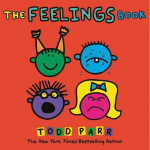
The Feelings Book by Todd Parr is a great book for early readers around 3 years of age. The Feelings Book features bright colours and simple yet eye-catching illustrations. These illustrations are of many people of many genders and skin colours making the book diverse and inclusive. Each page features simple text that always begins with “Sometimes I feel…”. This repetition is engaging for early readers as it promotes phonological sensitivity and awareness. The Feelings Book also promotes development of expressive vocabulary as it talks about emotions, feeling cranky or crying for instance, and more simple thoughts like enjoying bath time.

The Feelings Book would be considered a ‘complex concept’ book as it deals with emotions; this gives parents and care takers the opportunity to discuss the child’s feelings and ask them both open-ended and specific questions. “Sometimes I feel like trying something new”, is a great way to ask children if they like trying new things and what kind of new things they like to try. “Sometimes I feel lonely”, is a place to ask a child ‘why do you think the fish feels lonely?’ or ‘do you ever feel lonely?’. The Feelings Book also encourages movement and interaction. “Sometimes I feel like dancing” is an opportunity to dance around for a minute with the child. “Sometimes I feel like yelling really loud” gives the child a free pass on shouting with glee for a moment.

The Feelings Book does an excellent job of engaging early readers through its appearance, subject matter, vocabulary and the way it fosters open discussion with young children. This makes The Feelings Book a great choice for a parent or care taker to read to young children.